
Contents
It is the first question almost everyone asks once they decide to start: how long should I actually sit? Ten minutes? Twenty? An hour, like the people in the photographs?
The honest answer is less exciting and far more useful. The best length is the one you return to. So rather than hand you a number, this guide helps you find yours, then grow it at a pace that feels good.
Start smaller than you think
Five minutes counts. It is long enough to notice your breath settle, to feel the first restless urge to check your phone, and to let that urge pass. That is the whole practice in miniature: you drift, you notice, you come back.
Starting small works because it removes the negotiation. Twenty minutes can feel like a commitment you need to clear space for. Five minutes fits between the kettle and the inbox. When a sit is easy to begin, you begin it more often, and showing up on most days does more for you than one heroic session a week.
Why consistency beats duration
Think of it like learning a new walk to work. The route becomes familiar through repetition, not distance. A short daily sit teaches your body that this is a time to settle, and over a few weeks many people find they slip into that steadiness sooner. Long, occasional sits can feel wonderful, but on their own they rarely become a habit.
A sit you keep is worth more than a perfect one you abandon by Thursday.
Match the sit to your day
There is no single right time to meditate. There is a right time for you, and it may change with the season. Here is how each part of the day tends to feel.
Morning
A morning sit sets the tone before the day has a chance to. The house is quiet and your mind has not filled up yet. Five to ten minutes after you wake, before you look at a screen, is a lovely place to start.
Midday
A short sit in the middle of the day works like a reset. Two to five minutes at your desk, or in a parked car before you walk back in, can bring you back to yourself between meetings. It does not need to be long to help.
Night
An evening sit helps the day wind down. Keep it gentle: a few minutes sitting up in bed, eyes closed, letting your breath slow. If you drift toward sleep, that is fine. Your body is telling you what it needs.
How to grow your sit
Once five minutes feels easy, add a little. You will know it is time when you stop glancing at the clock. Two or three minutes at a time is plenty. If a longer sit starts to feel like a chore, step back down for a few days. Nothing is lost, and the next step will still be there.
Use a bell to mark the halfway point
A soft interval bell is one of the kindest tools for a longer sit. Set one at the midpoint and you no longer wonder how much time is left: the bell tells you, and you settle again. It also brings a wandering mind home without breaking the sit.
A bell that startles you pulls you out of the sit. Choose a soft tone at a low volume, and let it land like a hand on your shoulder rather than an alarm.
Try this: a 7-day plan
If you want a starting shape, use this one. It begins small, grows twice, and ends at ten minutes, a length many people find they can keep.
Seven days to ten minutes
Same time each day if you can. If a day slips, pick up where you left off.
51 minin total
- Days 1 to 35 min
Find the breath. Sit, close your eyes and follow your breathing. When your mind wanders, notice where it went and come back.
- Days 4 to 58 min
Add a marker. Set an interval bell at four minutes. When it sounds, let it bring you back to the breath.
- Days 6 to 710 min
Settle in. Keep the bell if you like it. You may find the last few minutes are the quietest of the sit.
Finished the week? Stay at ten minutes for a while before you grow again.
What a longer sit can feel like
As your sits grow, you may notice a change that is hard to name at first. Many people describe feeling steadier: less pulled around by every thought, a little calmer when the day gets loud, more like themselves. Some nights, sleep may come more easily. Focus can start to feel like less of an effort.
It will not look the same for everyone, and some days will feel scattered no matter how long you sit. That is part of it too. The practice is not about having a perfect session. It is about coming back, again and again, to a few quiet minutes that are yours.
Questions people ask
Is 5 minutes of meditation enough?
Yes. Five minutes is long enough to notice your breath and practice coming back when your mind wanders, which is the heart of meditation. A five-minute sit you do most days will usually serve you better than a long one you often skip.
Is it better to meditate in the morning or at night?
Either works. A morning sit helps set the tone for the day, and an evening sit helps it wind down. Pick the time you are most likely to keep, and try the other if it isn't sticking.
Should I use a timer or a guided app?
It depends on what you need. Guided sessions can help at the very start. A simple timer lets you sit in your own way, with no voice or course to follow, and many people find it easier to keep up once the basics feel familiar.
A timer that stays out of the way
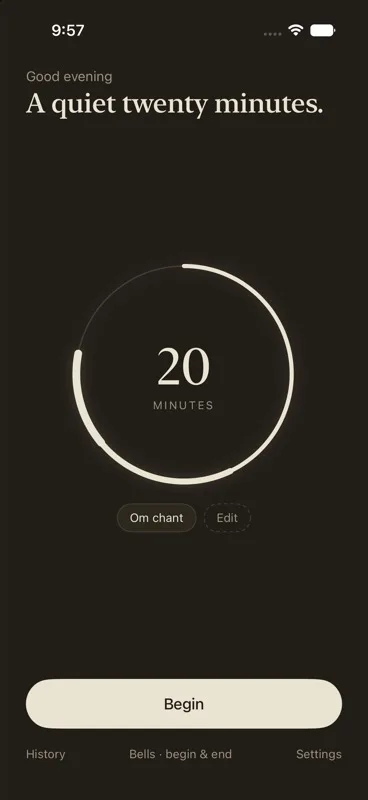
I built SimplySit because I wanted a timer that does one thing well. You tap, the sit begins, and it keeps going when your phone locks, with bells and sounds that don't glitch. If this guide gave you a length to try, it is a quiet place to sit it.